

Views: 0 Author: Site Editor Publish Time: 2026-06-08 Origin: Site


A commercially viable pet food relies as much on manufacturing execution as it does on nutritional science. Even the highest-grade palatants will fail if applied incorrectly during the final stages of production. Scaling a formulation from the lab to the factory floor introduces major physical challenges. Poor handling of powder flavorings leads to uneven coating. It blocks kibble pores. Ultimately, it causes rejected batches in palatability tests. Mastering the physical handling and sequencing of a Pet Food Flavor Enhancer ensures consistent aroma release. It maximizes the return on ingredient spend. Furthermore, it secures continuous feeding interest from the animal. You will learn the precise order of coating operations necessary for success. We will explore equipment calibration tactics. You will also discover how to evaluate suppliers and mitigate physical risks on the plant floor.
Order of Operations is Absolute: Dry powders must be applied after fats and liquids to remain on the kibble surface for maximum olfactory impact.
Equipment Precision Matters: Utilizing loss-in-weight feeders and high-precision ribbon blenders eliminates dead spots and ensures uniform distribution.
Mitigate Physical Risks: Implement mechanical agitators in hoppers to prevent powder "bridging" and maintain strict ambient humidity controls to avoid clumping.
Evaluate Supplier Support: The right flavor supplier provides not just the powder, but batch consistency data and application troubleshooting to support facility-level scale-up.
First impressions dictate product acceptance. Dogs and cats rely heavily on orthonasal odors to accept their first bite. They smell the food externally before they ever taste it. If a powder coating gets buried under heavy fats, the animal cannot detect the aroma. They may refuse the food entirely. Uniform distribution guarantees an immediate, intense olfactory trigger. You must present the flavor profile clearly to the animal.
We must protect formulation ROI at all costs. Inconsistent mixing results in distinct hot spots of flavor. This wastes premium palatants on a small percentage of kibbles. Meanwhile, it leaves the rest of the batch completely unflavored. You drive up raw material costs without improving overall product performance. Factories cannot afford to wash premium ingredients down the drain through poor application techniques.
Testing validation relies entirely on application uniformity. Palatability testing is highly sensitive to coating consistency. The standard two-pan preference test evaluates exact aroma dispersion. Animals will consistently ignore bowls lacking a uniform outer scent layer. Process failures frequently masquerade as formula failures. R&D teams often scrap perfectly good recipes because the plant failed to coat the kibble evenly. Ensuring physical uniformity protects the integrity of your sensory data.
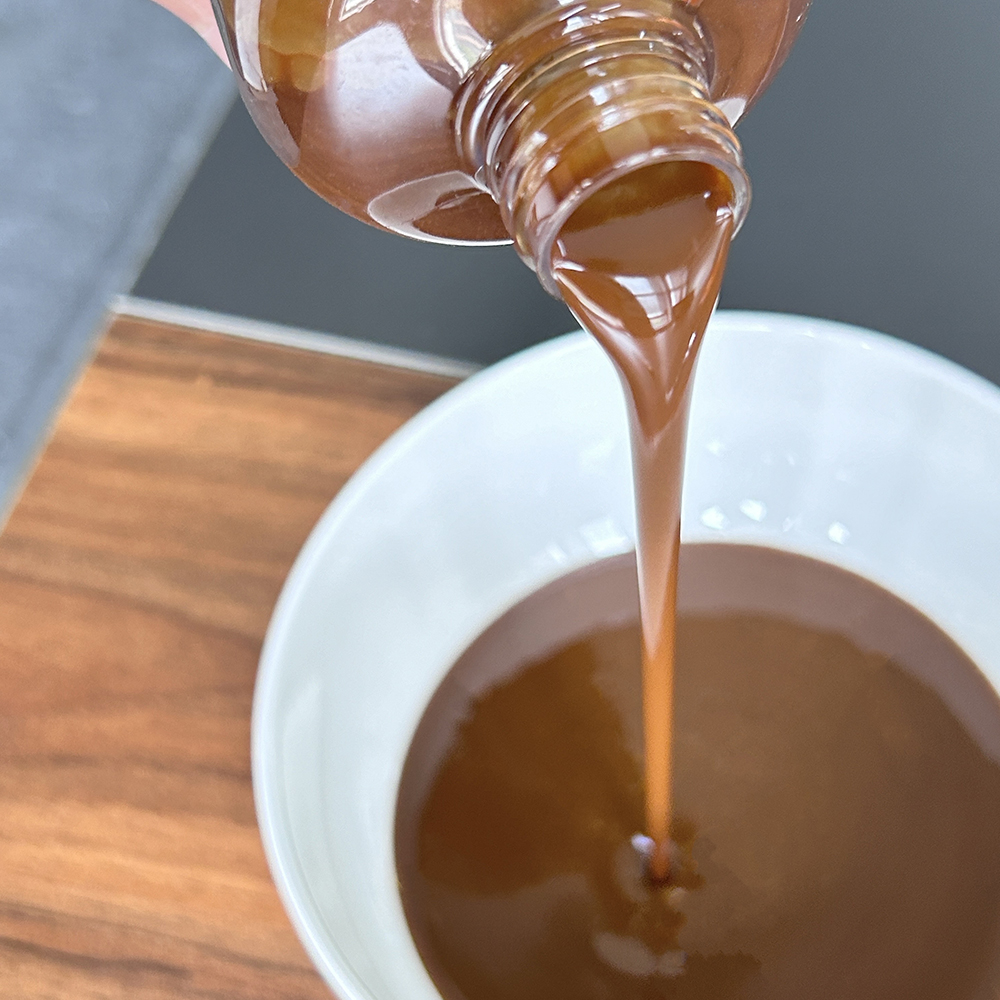
Sequence dictates commercial success. The physical structure of extruded kibble requires a highly specific coating hierarchy. Kibbles act like rigid sponges. You must prevent pore blockage. The palatant must remain exposed on the outermost layer. Reversing this sequence destroys the palatability mechanism.
Step 1: Fat/Grease Application: Fats must be applied first. They penetrate the deep kibble pores. Fats provide core caloric density. They also deliver foundational taste value. Liquid fats seal the internal matrix of the extrusion.
Step 2: Liquid Digest/Binders: Liquid palatants act as the essential adhesive layer. They coat the fat-sealed kibble. This creates a tacky surface for the subsequent dry application. The liquid layer prevents powder from blowing away during packaging.
Step 3: Powder Application: The dry powder flavor must be applied last. It rests on the sticky liquid layer. Applying powder before fats traps the delicate aroma molecules. The heavy grease crushes the powder into the pores. It severely diminishes the palatability impact.
Following this exact hierarchy ensures the animal smells the highest value ingredient first. The outer powder delivers the initial burst of aroma. The liquid layer provides sustained flavor during chewing. The inner fat layer delivers caloric satisfaction. This multi-layered approach keeps the animal engaged through the entire meal.
Standard gravity-fed systems often fail when handling fine powders. Precision feeders solve this critical issue. Utilizing loss-in-weight or volumetric feeders ensures accurate dosing. These advanced feeders monitor the exact mass of powder leaving the hopper. You achieve continuous application precisely aligned to the flow rate of the base kibble. This eliminates sudden surges or drops in flavor concentration.
Mixer selection dictates final homogenization. Dual-ribbon blenders feature micro-clearances between the blades and the trough. A 1/8 inch gap prevents material stagnation. The inner ribbons push material outward. The outer ribbons pull material inward. They generate intense radial and axial flow. This achieves complete homogenization of the pre-mix rapidly. Specialized paddle mixers also work well for fragile kibble shapes.
Atomization and distribution require careful engineering. Equip blending systems with vibratory distributors. Do not rely on static gravity drops. A vibratory system maintains an unbroken curtain of powder. It falls evenly over the moving kibble bed. This prevents clumps from hitting the mixer all at once.
Equipment Type | Primary Function | Key Benefit for Pet Food |
|---|---|---|
Loss-in-Weight Feeder | Powder Delivery | Real-time adjustment to kibble flow rates. |
Dual-Ribbon Blender | Batch Mixing | High shear mixing without creating dead zones. |
Vibratory Distributor | Material Dispersion | Creates a uniform powder curtain over moving kibble. |
Rotary Paddle Mixer | Gentle Blending | Minimizes kibble breakage while ensuring even coating. |
Fine powder palatants are highly prone to cohesive arching in storage bins. Operators call this bridging or rat-holing. It stops production lines instantly. Practical handling tips include installing mechanical agitators inside the hopper walls. Pneumatic flow aids or air cannons also help maintain continuous flow. You must keep the powder moving to prevent compaction.
Managing dust and breakage requires strict timing. After you apply the powder, gentle but thorough stirring is necessary. Industry standards mandate 45–60 seconds of mixing time. Over-mixing generates excess mechanical friction. You will cause severe kibble breakage. Broken kibble creates excess dust. This dust absorbs the expensive flavorings. It then gets lost into the ambient air or the filtration system.
Humidity and clumping control dictate long-term stability. Dry flavorings are exceptionally hygroscopic. They actively pull moisture from the air. Manufacturing environments must maintain tightly controlled humidity levels. Storage tanks must be sealed properly. This prevents moisture absorption. Wet powder clumps immediately. Clumps clog spray nozzles and harbor bacterial growth.
Calibrate loss-in-weight feeders weekly to account for changes in powder density.
Install dehumidifiers directly above the powder application zones.
Conduct visual tracer tests quarterly to verify coating uniformity across batches.
Use stainless steel hoppers polished to a 60-mesh finish for easy cleaning.
Blowing high-pressure air directly into powder hoppers, which separates fine and coarse particles.
Extending mixing times past two minutes in an attempt to "fix" a poor spray pattern.
Failing to clean the ribbon blender trough daily, leading to rancid fat buildup.
Batch-to-batch consistency separates average suppliers from premium partners. Look for suppliers offering comprehensive analytical certificates. Every batch must prove consistent particle size distribution. Flowability metrics dictate how the powder behaves in automated dry blending systems. A sudden change in particle size will instantly clog your distributors.
Verify all quality control and safety protocols. The supplier must actively test for harmful toxins. They should utilize highly traceable sourcing for any animal or plant-derived digests. They must monitor parameters like peroxide values if lipid carriers are involved. High peroxide values indicate early stage rancidity. Rancid carriers destroy palatability before the bag ever opens.
Technical integration support remains vital for commercial success. A trustworthy B2B partner offers direct engineering support. They help calibrate your specific plant equipment. They guide optimal mixing times. They validate your precise coating sequences. They do not just drop off pallets of powder. They ensure your facility can actually apply the product efficiently.
Optimizing the physical handling of powder flavorings bridges the gap between laboratory science and commercial success. A perfect recipe means nothing if the plant applies it poorly. You must respect the strict coating hierarchy of fat, liquid, then powder. You must invest in high-precision delivery equipment.
Plant managers should audit their current coating sequences immediately. Inspect all hopper agitation mechanisms for signs of bridging. Request updated flowability data from your palatant suppliers. Use this data to baseline your current blending efficiency. Taking these steps protects your formulation investments and ensures pets consistently love your product.
A: Powders provide a distinct, concentrated burst of surface aroma. Liquids alone often cannot achieve this immediate olfactory impact. When used sequentially, applying liquid first and then powder creates a highly attractive, multi-layered flavor profile. This maximizes both initial acceptance and continuous feeding.
A: Manufacturers use visual tracers or conduct lab-level proximate analysis. You draw multiple samples from a single production run. You then measure the variation across those samples. This ensures the coefficient of variation remains well within acceptable industry thresholds.
A: Yes. Improperly calibrated equipment creates dead spots in the mixer. Leftover fat and powder accumulate in these zones. This buildup rapidly oxidizes or harbors bacteria. When fresh kibble passes through, it picks up this rancid material, severely shortening the shelf life of subsequent batches.


 phoebe@tdtbio.com
  +86-18972222769
 Haowangzhuang Town, Wucheng County, Dezhou City, Shandong Province, China