

Views: 0 Author: Site Editor Publish Time: 2026-02-13 Origin: Site


Some pets eat fine, then feel off later.
Loose stool, gassiness, picky meals. We see it often.
Protein still matters every day. Digestion matters too.
So we look at Peptide Protein For Pets as a gentler option.
Many formulas use Pet Small Peptide Protein For Pets to support easy digestion.
We’ll keep it practical. We’ll keep it readable.
We’ll also go deeper than the usual “peptides are good” talk.
We want you to understand how it works. Then you can choose better.
We explain what Peptide Protein For Pets means in plain words.
We show how small peptides get made, plus what “small” should prove.
We map digestion benefits and the signals people actually track.
We compare peptides to other “gentle proteins” and show trade-offs.
We share formulation tips, plus palatability details, in a simple way.
We cover feeding transitions, safety, FAQs, and industry trends.
Note. This is nutrition education. It is not medical advice.
Peptide Protein For Pets means protein broken into shorter chains.
Those short chains are peptides. They sit between intact proteins and amino acids.
In plain terms, it’s pre-cut protein. It arrives partly prepared.
It can reduce digestion workload for some pets. They may handle it easier.
It can also change how a recipe behaves. It can dissolve better.
It may even change how a meal smells and tastes. Pets notice those details.
We often hear one question. “Is it the same as hydrolyzed protein?”
In many cases, yes. Hydrolysis is the process used to create peptides.
But “small peptide” should mean size control is tighter, more consistent.
Consistency matters because pets react to small changes quickly.
| Option | Structure | How the gut may experience it | Typical use in pet food |
|---|---|---|---|
| Intact protein | Large molecules | Needs more breakdown work first | Most standard diets |
| Small peptide protein | Short chains, controlled distribution | Often easier handling for sensitive pets | Sensitive digestion, functional formulas |
| Free amino acids | Single units | Fast availability, very direct | Precision balancing, supplements |
Pet Small Peptide Protein For Pets usually targets the middle lane.
It aims for gentler digestion, plus a “complete protein” style feel.
It can also support palatability strategies in toppers and wet systems.
“Small” is not a vibe. It is a measurable outcome.
Peptide size influences digestibility perception, plus mixing behavior.
It can influence viscosity in wet food systems. It can influence clarity too.
It can influence dustiness in dry blends. They all matter in production.
Shorter chains can reduce the breakdown workload during digestion.
They can support faster availability in many diet designs.
They can support more predictable stool outcomes for some pets.
They often dissolve well, so gravies and toppers benefit.
They can help during diet transitions, when the gut feels stressed.
Still, peptides are not a magic fix. They are a tool.
We use it well, or we waste it. We should choose carefully.
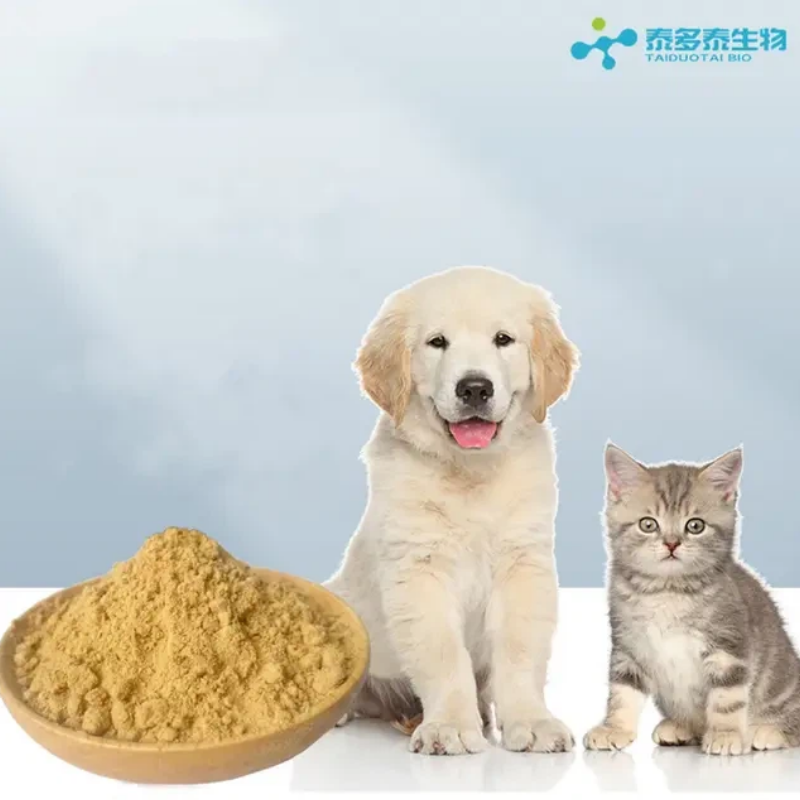
Most small peptide ingredients start from a protein source.
Then enzymes cut the proteins into shorter chains. It is controlled.
This step is hydrolysis. It is common in functional pet nutrition.
After that, the ingredient can be filtered, refined, then dried.
It ends as a powder or a suitable ingredient form for formulations.
Here is the key point. Process control creates predictable peptides.
Without control, “peptides” becomes a random mixture. Pets may react.
So we care about how the supplier manages time, temperature, enzymes.
We also care about how they lock in the final profile. It matters.
| Step | What happens | What can go wrong | What “good” looks like |
|---|---|---|---|
| Raw selection | Standardize protein source inputs | Spec swings, taste swings | Stable sourcing, traceable lots |
| Enzymatic hydrolysis | Enzymes cut proteins into peptides | Over-cut or under-cut peptides | Controlled peptide distribution |
| Size control | Manage peptide range across batches | Inconsistent digestion response | Repeatable profile, batch to batch |
| Drying / finishing | Powder form, stable storage | Burnt notes, clumping | Clean odor, good flowability |
| Testing / COA | Confirm protein, micro, key specs | No proof, no trust | Clear COA and stable results |
We do not buy “peptides.” We buy predictable performance.
So we ask for details. Then we compare suppliers fairly.
Peptide size profile. It proves what “small peptide” means.
Protein content. It supports nutrition targets and labeling.
Solubility. It helps wet mixing, plus topper performance.
Micro limits. It protects safety and shelf life.
Odor and taste notes. It predicts palatability risk.
Application notes. It saves time during trials.
For quick Q&A, see the FAQ.
People choose Peptide Protein For Pets for comfort and consistency.
They want meals that land well. Not a daily gamble.
They also want stable intake. Especially for picky pets.
They want stool to stabilize. They want less gas too.
Peptides can support these goals. It depends on the full formula.
Protein structure matters. Fiber matters. Fat level matters too.
We should avoid the “single ingredient hero” mindset. It misleads.
| Signal | What “better” can look like | What it can mean | What to do |
|---|---|---|---|
| Stool | Firmer, more regular | Digestion feels smoother | Keep transition steady, avoid treat spikes |
| Gas | Less bloating, less odor | Better tolerance for the diet | Check fiber balance and feeding routine |
| Appetite | More consistent eating | Meal feels easier to handle | Support palatability, keep schedule stable |
| Energy | Steady activity, normal play | Better intake, better utilization | Monitor body condition over time |
Digestion has timing. Some proteins break down slower.
Small peptides can become available sooner, in many diet designs.
It can reduce “heavy meal” feelings in some pets.
It can also support stable energy patterns, when intake is steady.
For active pets, faster availability can support recovery routines.
For senior pets, gentler breakdown can reduce digestive stress.
For picky pets, easier digestion can reduce food refusal cycles.
They often refuse after a bad experience. We should prevent it.
If you want application examples, see Pet Food Solutions.
Not every pet needs peptides. Many do fine on standard diets.
But some pets benefit more. We see a few common profiles.
When digestion feels sensitive, structure can matter more than people think.
Sensitive stomach dogs. They react to richer meals, sudden switches.
Picky cats. They need aroma, plus gentle digestion support.
Seniors. Digestion can slow. Consistency helps a lot.
Active pets. Efficient protein availability supports recovery routines.
Transitioning pets. Stress can shift stool and appetite quickly.
| Situation | Fit | Why it can help | Extra note |
|---|---|---|---|
| Frequent soft stool | Often strong | Gentler protein handling for some pets | Also review treat frequency and fat level |
| Diet transition stress | Strong | More predictable digestion response | Go slow, reduce treat variety |
| Picky appetite | Medium | Can support comfort, reduce refusal cycles | Palatability strategy still needed |
| Suspected allergy | Case-by-case | Hydrolysis may help some pets, not all | Source matters, vet guidance helps |
Serious signs need fast help. A veterinarian should lead.
Not every “gentle” protein works the same way.
Some options focus on the source. Others focus on structure.
Peptide Protein For Pets focuses on structure. It’s pre-broken protein.
But it is not the only option. Sometimes source change works better.
| Option | Main focus | Why it can help | Common trade-off | Best fit |
|---|---|---|---|---|
| Small peptide protein | Chain size control | Gentler handling, often better solubility | Cost, taste control work | Sensitive digestion, wet systems |
| Novel proteins | New source exposure | May reduce reaction if previous source triggers issues | Supply stability, cost swings | Ingredient rotation, sensitivity plans |
| Fermented proteins | Processing change | Can improve functional properties in some systems | Flavor profile varies, acceptance risk | Treats, toppers, functional claims |
| Free amino acids | Precision balancing | Fast availability, accurate nutrition targets | Diet feel, palatability complexity | Formula tuning, supplements |
| Standard intact proteins | Whole proteins | Simple, cost-effective, common | Harder digestion for some pets | Most everyday diets |
So when do we choose Pet Small Peptide Protein For Pets?
When digestion support ranks first. When consistency matters more.
When wet mixing needs fast solubility. It helps there.
When we want predictable palatability control. It can help there too.
Labels sound confident. Specs prove the story.
We should read both. We should ask direct questions.
If a supplier explains it clearly, it’s a good sign.
Hydrolyzed protein
Small peptide protein
Oligopeptides
Peptide-rich protein
Easy-to-digest protein ingredient
These terms overlap. They can also hide big differences.
So we rely on the peptide profile and batch consistency. They matter.
| Question | Why it matters | Good answer includes | Practical follow-up |
|---|---|---|---|
| Peptide size distribution? | Proves “small” is real | Range, method, batch stability | Ask for two recent COAs to compare |
| Protein source and traceability? | Safety and supply reliability | Origin, batch trace, raw control | Ask how they handle raw variability |
| COA and micro testing? | Quality proof | Key specs, micro limits, consistency | Ask testing frequency and lab type |
| Solubility and heat tolerance? | Process compatibility | Mixing notes, heat-step guidance | Ask for wet system trial guidance |
| Palatability notes? | Pets must eat it | Odor control, taste notes, trials | Ask for suggested flavor pairing |
Big claims, no COA, no testing method. It is risky.
Spec swings between batches. Pets notice. Plants notice too.
Vague sourcing. Vague processing. No traceability story.
Strong bitter note, harsh odor. No mitigation plan.
No application support. You end up guessing in trials.
For a category overview, see Hydrolyzed Protein.
Formulation needs two wins. Nutrition and processing.
Peptide Protein For Pets can support both, if we use it carefully.
It can help digestibility positioning. It can help wet mixing too.
But we still run trials. We still track intake and stool.
| Application | What peptides can do | What we test first | What we monitor later |
|---|---|---|---|
| Dry kibble | Support digestible protein concept | Extrusion stability, odor after drying | Stool response, intake stability |
| Wet food / gravy | Improve solubility, dispersion | Viscosity, separation after storage | Palatability, aroma consistency |
| Treats / toppers | Boost protein, support taste profile | Dustiness, texture, coating behavior | Preference, repeat purchase signals |
| Supplements | Provide easy mixing protein support | Flowability, clumping, stability | Owner compliance, pet acceptance |
Palatability is not only fat and aroma. It is also taste perception.
We usually talk about umami here. Pets respond to it strongly.
Many peptide-rich ingredients carry savory notes. They can support umami.
But the strongest umami perception often comes from synergy.
Glutamate provides a base taste. Nucleotides can amplify it.
When both appear together, perceived umami often jumps.
So we aim for balance, not overload. Too much can feel harsh.
| Setup | What you add | Perceived umami impact | What it feels like | How we use it |
|---|---|---|---|---|
| Base savory | Glutamate-type components | ▲▲ | Clean savory foundation | Start point for many recipes |
| Amplifier only | Nucleotide-type components | ▲ | Supportive, not complete alone | Use as a “lift,” not a base |
| Synergy peak | Glutamate + nucleotides | ▲▲▲▲▲ | Fuller, stronger umami perception | Great for picky pets, controlled use |
| Synergy + peptide base | Both + peptide-rich ingredient | ▲▲▲▲▲+ | Rounder “meaty” note, longer finish | Useful in toppers and wet gravies |
We still test it in real feeding trials. Pets decide, not charts.
For a product example, see Hydrolyzed Chicken Meat Powder.
Peptides can taste great. They can also taste sharp if uncontrolled.
Bitterness can come from certain peptide sequences. It happens.
So we use a few practical steps. They keep acceptance high.
We control hydrolysis conditions. It reduces harsh profiles.
We pair it with fats and aromas. It rounds the taste.
We avoid stacking too many strong savory boosters.
We run preference trials. They catch issues early.
Start small. Follow supplier guidance for use level.
Run bench tests. Solubility, odor, texture, flowability.
Run pilot production. Check stability after heat steps.
Run palatability trials. Measure preference and intake.
Run digestion tracking. Stool score, gas notes, comfort.
We keep notes for every batch. It makes the next run easier.
If you’re a pet parent, keep changes slow.
Sudden switches upset digestion. Many pets react quickly.
We want a calm transition. We want stable stool.
Days 1–3: Mostly old food, small amount new.
Days 4–6: Half and half, if stool stays stable.
Days 7–10: Mostly new food, then fully new.
Common mistake. Too many new treats during the transition.
Another mistake. Switching flavors daily. It confuses the gut.
We keep routine stable. They do better.
| Signal | What you want | If it worsens | Simple tip |
|---|---|---|---|
| Stool | Firm, regular | Slow the transition, call a vet if needed | Keep treats low, keep water available |
| Gas | Less odor, less bloating | Reduce treats, adjust pace | Feed smaller meals, same daily times |
| Appetite | Steady eating | Check hydration, check palatability | Warm wet food slightly, keep it consistent |
| Energy | Normal play, normal walks | Stop changes if lethargic, call a vet | Track sleep and water too |
Repeated vomiting. It keeps happening.
Blood in stool. Black stool too.
Rapid weight loss, dehydration signs.
Pain signals. Hunched posture, crying.
Safety depends on two things. Ingredient quality and full diet balance.
Peptides are still protein pieces. They still need good sourcing.
Most pets tolerate them well in properly balanced foods.
But individual pets vary. They always do.
Yes, often. It fits daily feeding in many complete diets.
The formula should be complete and balanced. That matters most.
For medical conditions, a veterinarian should guide the plan.
They can, sometimes. Source still matters a lot.
Hydrolysis may reduce reactivity for some pets. No guarantees.
If allergy signs appear, stop the trial. Then call a vet.
Is Pet Small Peptide Protein For Pets the same as hydrolyzed protein?
Often yes in concept. “Small peptide” suggests tighter size consistency.
How fast can digestion change after switching?
Some pets improve in days. Others need weeks. Track stool and comfort.
Is it good for cats too?
It can be. Cats care about taste. Aroma strategy still matters.
Will it fix diarrhea?
It can help mild diet-related issues. Persistent diarrhea needs a vet.
Can it support gut health?
It supports easier digestion. Gut health also needs fiber and routine.
Can I combine it and probiotics?
Often yes in complete diets. Keep changes gradual. Track response.
What tests show peptide quality?
Peptide size profile, protein content, micro limits, batch consistency.
Pet nutrition keeps getting more precise.
Owners want fewer reactions. They want predictable meals.
Brands respond by building sensitive digestion lines.
They also test more. They publish more. It’s a good trend.
It’s about timing. How fast protein becomes available.
Some pets do better when breakdown feels gentler and steadier.
We also like stable absorption. It supports steady energy and stool.
This is why small peptides keep growing in use.
Sensitive digestion kibble. Clear positioning, clear benefit.
Wet food for picky pets. Easy mixing, aroma control.
Senior diets. Gentle digestion focus, stable intake goals.
Functional toppers. Quick dissolve, simple daily use.
Clarity matters. Not vague “peptide” claims.
Data keeps trust alive. It does the heavy lifting.
If you build formulas, you want fewer surprises.
Pet Small Peptide Protein For Pets supports easy digestion positioning.
It supports solubility too. Wet systems benefit a lot.
It can support intake, if aroma stays controlled.
Clear purpose, no hype, no medical claims.
Source description, simple traceability story.
COA availability, batch consistency notes.
Application scenarios, kibble, wet food, treats.
Practical guidance, trials, palatability checks.
If you want a broad product view, visit Products.
Here’s the takeaway, kept simple.
Peptide Protein For Pets is protein cut into smaller chains.
It can feel easier on digestion. It can support smoother transitions too.
Pet Small Peptide Protein For Pets fits sensitive digestion formulas, plus wet systems.
Pick it for pets who struggle after meals.
Pick it for diets needing fast solubility.
Pick it for consistency, backed by specs and testing.
Keep changes gradual. Track stool, comfort, appetite.
If symptoms look serious, call a veterinarian. Don’t guess.


 phoebe@tdtbio.com
  +86-18972222769
 Haowangzhuang Town, Wucheng County, Dezhou City, Shandong Province, China