

Views: 0 Author: Site Editor Publish Time: 2026-07-10 Origin: Site


Even the highest-quality palatability enhancers fail if they do not physically adhere to the kibble. In commercial extrusion, applying a premium coating is useless if it ends up as dust at the bottom of the bag. Poor adhesion causes inconsistent feeding trials, product waste, and compromised brand trust due to variable batch palatability. When a pet food palatant fails to bond, the nutritional profile remains intact, but the animal refuses the meal. Manufacturers must control the physical variables at the coating drum to ensure consistent flavor delivery. Mastering the interaction between kibble surface fat, porosity, and palatant format is the critical technical lever for optimizing production yield and ensuring consistent pet acceptance. By understanding how fat acts as a binding matrix, processors can select the right application temperatures and palatant formats to maximize adherence and minimize waste.
Fat as the Binding Matrix: Surface fat acts as the primary adhesive layer; its application temperature, viscosity, and distribution directly control how well subsequent palatants bond to the extrudate.
Format Compatibility: The choice between liquid and powder formats must align with the kibble's fat profile to prevent clumping, flaking, or absorption issues.
Temperature & Agitation Controls: Maintaining precise temperature controls (typically between 70°F and 95°F for liquids) and using agitated storage systems are non-negotiable for achieving uniform fat distribution and optimal palatant adhesion.
Mitigating Implementation Risk: Auditing coating equipment, adjusting for kibble micro-structure (porosity and shape), and managing fat migration are required steps before scaling a new palatant application.
The success criteria for a coated kibble include uniform coverage, zero palatant dust-off, stable texture, and consistent flavor release over the product's shelf life. Achieving this requires a precise understanding of how the kibble matrix interacts with applied fats and flavorings. When you walk the floor of an extrusion plant, the coating drum is where the product either succeeds or fails. If the fat application is off by even a few degrees, the entire batch can suffer from poor palatability.
The degree of starch gelatinization during extrusion dictates kibble porosity. High expansion rates create larger internal voids. If these pores are left open, applied liquids and powders migrate deep into the kibble matrix where pets cannot taste them. You need the surface fat to fill these pores, creating a foundational layer that prevents palatants from being lost inside the kibble. This fat layer acts as a sealant, keeping the active flavor compounds on the exterior surface where they immediately interact with the animal's olfactory and gustatory receptors.
Controlling expansion at the extruder die directly impacts how much fat the kibble can hold. A highly porous kibble might absorb 10% fat easily, while a dense, low-expansion kibble might struggle to hold 5% without becoming greasy. Operators must adjust the specific mechanical energy (SME) during extrusion to hit the target bulk density, which in turn dictates the porosity and the required fat application rate.
Kibble geometry and total surface area affect the mechanical binding capacity of the fat layer. A round kibble presents a uniform surface, while stars or triangles have increased surface area and sharp edges subject to mechanical attrition in the coating drum. Complex shapes with high surface-to-volume ratios require specific fat application adjustments to prevent pooling in crevices. If fat pools in a star-shaped kibble's grooves, the subsequent powder application will clump in those areas, leaving the flat surfaces uncoated and reducing overall palatability.
Kibble Shape | Surface Area Ratio | Coating Difficulty | Fat Pooling Risk |
|---|---|---|---|
Round/Sphere | Low | Easy | Low |
Flat Disk | Medium | Moderate | Low |
Triangle | Medium-High | Moderate | Medium |
Star/Cross | High | Difficult | High |
Fat creates a tacky surface that captures dry particles and anchors liquid coatings. The physics of adhesion rely on the fat transitioning from a liquid state during application to a semi-solid state as it cools, locking the palatant onto the kibble surface. The fat layer influences the physical texture of the kibble, which directly affects canine palatability. A well-coated kibble retains a desirable crunch, whereas excessive liquid application without proper fat anchoring can lead to a soft, unappealing texture.
When evaluating the binding matrix, you have to look at the tumble rate of the coating drum. If the drum spins too fast, the kibble breaks, creating fines that absorb the fat and palatant, stealing it from the intact kibble. If it spins too slow, the fat doesn't distribute evenly. Finding the sweet spot in retention time and mechanical agitation is what separates a good coating process from a great one.
The combination of surface fat and a pet food palatant creates a masking effect that seals in bitter or unpalatable base notes from raw kibble ingredients. Plant proteins or high-mineral meals often carry astringent flavors that deter consumption. By establishing a robust fat barrier topped with a high-quality palatant, manufacturers effectively block these negative base notes. The fat layer ensures the animal smells and tastes the intended flavor profile first, rather than the underlying nutritional matrix.
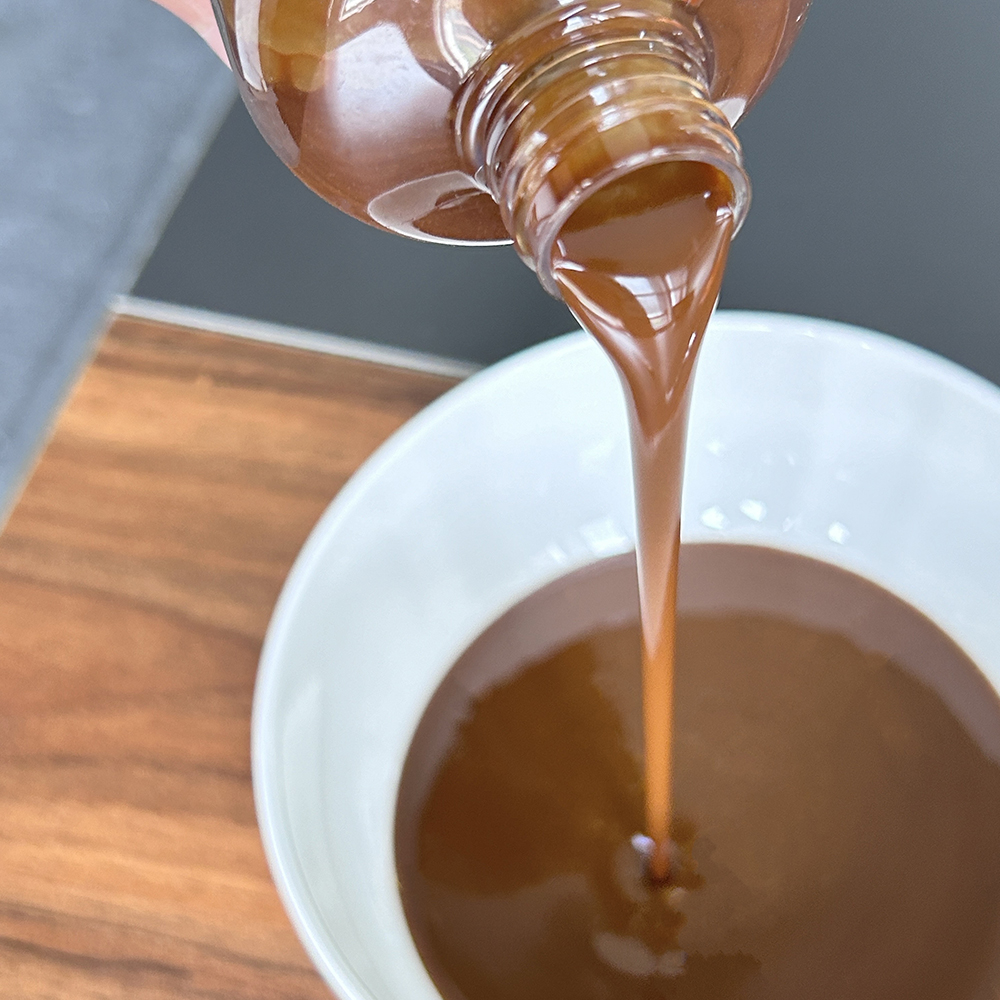
Different fat sources impact the mechanical binding of palatants based on iodine value, melting point, and crystallization rate. Selecting the appropriate fat is necessary for establishing a stable adhesive layer. You cannot treat all fats the same; poultry fat behaves entirely differently in a spinning drum than beef tallow or canola oil.
Common animal fats like poultry fat or beef tallow have higher melting points compared to vegetable oils such as canola or soy. This physical characteristic dictates how the fat behaves inside the coating drum upon contact with the warm extrudate. Higher-melting-point fats solidify faster on the kibble, narrowing the critical window of time available for successful palatant application. If a powder is applied after the fat has fully crystallized, it will not adhere, leading to significant dust-off in the packaging line.
Poultry Fat: Excellent palatability, moderate melting point, widely used as a standard binder.
Beef Tallow: High melting point, requires higher application temperatures, sets up very quickly on the kibble.
Pork Fat (Lard): Good flavor profile, slightly lower melting point than tallow, offers a good tacky surface for powders.
Canola Oil: Liquid at room temperature, penetrates deeply, can leave a greasy surface if over-applied.
Maintaining fats and liquid palatants at optimal temperatures (70°F to 95°F) prevents premature crystallization. Temperature control directly influences the viscosity of the coating liquids, ensuring an even spray pattern across the kibble mass. Agitated storage tanks and inline heating systems maintain a homogeneous fat temperature and prevent fat separation before spraying. Applying fat too hot causes deep absorption rather than surface coating, while applying it too cold causes uneven, clumpy distribution and poor palatant binding.
In the plant, operators must monitor the temperature of the kibble exiting the dryer. If the kibble is too hot (above 120°F), the fat will not set up fast enough, and the powder will slide off. If the kibble is too cold (below 80°F), the fat solidifies on contact, creating a shell that flakes off during transport. The delta between the fat temperature and the kibble temperature is the most critical metric in the coating zone.
The fat layer encapsulates delicate palatant molecules, protecting volatile aroma compounds from evaporation. This encapsulation preserves long-term shelf-life palatability, ensuring the product smells fresh upon opening. Without this protective fat matrix, aroma compounds dissipate rapidly. The encapsulating qualities of the fat contribute heavily to the product's sustained flavor release, making the fat application step as critical as the choice of palatant itself.
Application strategies must be tailored based on the physical state of the palatability enhancer. The interaction between the format and the fat layer determines the efficiency of the coating process. You have to match the equipment capabilities with the physical properties of the palatant.
Liquid palatants interact dynamically with the fat layer. A liquid dog food palatant requires a specific fat-to-moisture ratio on the kibble surface to prevent a soggy exterior that degrades texture. Spray nozzle configurations and pneumatic system calibrations are required to achieve an even emulsion with the surface fat. Proper atomization ensures the liquid coats the fat layer uniformly without penetrating too deeply into the kibble core.
When setting up the spray manifold, you need to ensure the spray angle covers the falling curtain of kibble inside the drum. If the nozzles are positioned incorrectly, you get overspray on the drum walls, which builds up, goes rancid, and eventually falls off in large chunks, contaminating the product stream. Regular inspection and cleaning of the pneumatic atomizers prevent clogging and ensure a consistent droplet size.
A powder dog food palatant depends on a precisely timed fat application. The powder must be applied while the fat is still tacky but not completely solidified to ensure mechanical adhesion. Optimizing the fat layer reduces wasted powder in the coating drum and packaging. Minimizing dust-off improves facility cleanliness and ensures the calculated dose of palatant actually reaches the consumer's pet.
Powder application systems usually rely on loss-in-weight feeders and augers. The drop point of the powder is critical. It must hit the kibble immediately after the fat spray zone. If the distance between the fat spray and the powder drop is too long, the fat cools, and the powder bounces off. Operators must adjust the drop chute to hit the exact spot where the kibble is tumbling and the fat is at peak tackiness.
The industry-standard sequential coating method involves applying fat, followed by a concentrated liquid dog palatant, and finishing with a powder application. This sequence builds a complex flavor profile on the kibble surface. This layering technique maximizes flavor complexity. It utilizes the concentrated liquid dog palatant as an additional sticky binding layer for the final high protein powder dog palatant, ensuring maximum retention of dry flavorings.
Base Fat Application: Spray the primary fat source to seal the kibble pores and create the initial tacky layer.
Liquid Palatant Application: Atomize the liquid palatant over the fat layer to build the first flavor profile and add moisture for powder binding.
Powder Palatant Application: Drop the dry powder onto the wet, tacky surface, allowing the tumbling action to press the particles into the liquid/fat matrix.
Curing/Cooling: Allow the coated kibble to tumble briefly without further additions to let the fat set and lock the layers in place before exiting the drum.
The physical mechanics of surface fat adhesion on dry kibbles differ significantly from the emulsified fat matrices used in wet pet food production. In dry kibble, the fat must act as an external binder. Surface tension is less of a barrier in wet retort systems, where fats and palatants are mixed directly into the slurry. Understanding this distinction helps processors optimize their specific application equipment for dry extrusion lines.
Manufacturers must navigate commercial and nutritional compromises when designing a coating system. Balancing ingredient costs with palatability performance requires careful formulation adjustments. You cannot just throw the most expensive fat at the problem; you have to engineer a solution that fits the product's nutritional targets and the plant's operational budget.
Using premium fats like chicken fat as binders offers excellent palatability but increases production costs compared to standard industry fats or vegetable oils. Processors must evaluate the return on investment for premium binders. High-fat diets, such as performance or puppy formulas, present unique adhesion challenges. Excessive surface fat can cause fat migration, which washes away surface palatants over time, leading to a greasy appearance and reduced flavor impact.
When formulating a 20% fat performance diet, you cannot apply all that fat at the coating drum. The kibble will not hold it. You must inject a portion of the fat directly into the extruder barrel or the pre-conditioner. This internal fat does not help with palatant adhesion, so you still need to reserve 5% to 8% of the fat for the external coating process to ensure the powders and liquids stick.
Achieving optimal adhesion in low-fat, limited-ingredient, or grain-free diets is difficult where traditional animal fat binders are restricted. Substituting with alternative oils changes the crystallization dynamics in the coating drum. Natural antioxidants, such as mixed tocopherols or rosemary extract, impact the oxidative stability of both the surface fat and the applied pet food palatant. Maintaining stability is essential to prevent rancidity, which immediately destroys palatability.
Identifying common failure points in the manufacturing facility allows operators to correct adhesion issues before they result in rejected batches. Equipment calibration and environmental controls are critical. When you see dust in the packaging hopper, you know you have a problem upstream in the coating zone.
Fat migration occurs when surface oils absorb into the kibble or transfer to the packaging material during storage. This movement strips the palatant from the kibble surface, reducing the initial flavor impact when the pet eats. Oxidation degrades the fat layer, producing off-odors that pets reject. Proper application of antioxidants and precise control of coating temperatures mitigate these risks, ensuring the palatant remains securely bonded and flavorful throughout the product's intended shelf life.
To fix adhesion issues on the floor, start by checking the spray nozzles. If they are partially clogged, you get a stream instead of a mist, causing localized over-application and bare spots. Next, check the kibble temperature coming out of the dryer. If it fluctuates, your fat crystallization rate will fluctuate, leading to inconsistent powder binding. Finally, verify the powder feeder calibration. If it is dropping too much powder, the fat layer will be overwhelmed, and the excess will simply fall off.
To optimize your coating process, take the following actions:
Calibrate all spray nozzles and powder feeders weekly to ensure accurate application rates.
Monitor the delta between kibble temperature and fat temperature to control crystallization speed.
Inspect the coating drum daily for buildup, which indicates improper spray angles or excessive moisture.
Conduct routine shelf-life testing to monitor fat migration and its impact on long-term palatability.
A: Liquid palatants perform best when maintained and applied between 70°F and 95°F. This temperature range ensures optimal viscosity for even spraying and prevents premature crystallization of the surface fat layer.
A: Powder dust-off occurs when the surface fat layer is either too cold and solidified before the powder is applied, or applied too thinly to anchor the dry particles. Adjusting fat application timing and temperature usually resolves this.
A: Yes, but vegetable oils generally have lower melting points than animal fats. This requires adjusting the coating drum parameters and cooling times to ensure the oil becomes tacky enough to hold the palatant before packaging.
A: Highly porous kibble absorbs surface fat rapidly. If the fat sinks deep into the kibble matrix, it cannot act as a surface binder, causing subsequent palatants to either absorb as well or fail to adhere entirely.
A: Sequential coating—applying fat, then liquid palatant, then powder—builds a robust flavor profile. The liquid layer acts as an additional adhesive for the powder, maximizing total palatant retention on the kibble surface.
A: Adjust the atomization pressure to create a finer mist and increase the retention time in the coating drum. This allows the mechanical tumbling action to spread the fat evenly across all surfaces and crevices.


 phoebe@tdtbio.com
  +86-18972222769
 Haowangzhuang Town, Wucheng County, Dezhou City, Shandong Province, China